Residential · Sewer & main drain
Sewer Line Repair in Markham
When a camera shows a cracked, sagging or collapsed sewer lateral, clearing alone stops working. Repair is the step that ends the cycle of call-backs.
- Floor drain hosed and disinfected after a backup
- Distance to the fault measured on the cable
- Camera footage of the lateral reviewed with you
- Dig or line? Both options laid out before a shovel moves
- Licensed plumbers (details on request)
- Price agreed before work
- Call-only, no forms
- Tested before we leave
Signs you need sewer line repair
The clearest sign is a camera recording that shows physical damage: a broken pipe wall, a joint pulled apart, a section crushed flat or a long belly holding standing water. Other hints show up without a camera. Clogs return within weeks of a clearing. A strip of lawn over the line stays greener or wetter than the rest. A driveway or walkway sinks along a straight path from the house to the street. A sewer smell lingers near the foundation outside.
Our routine on the day
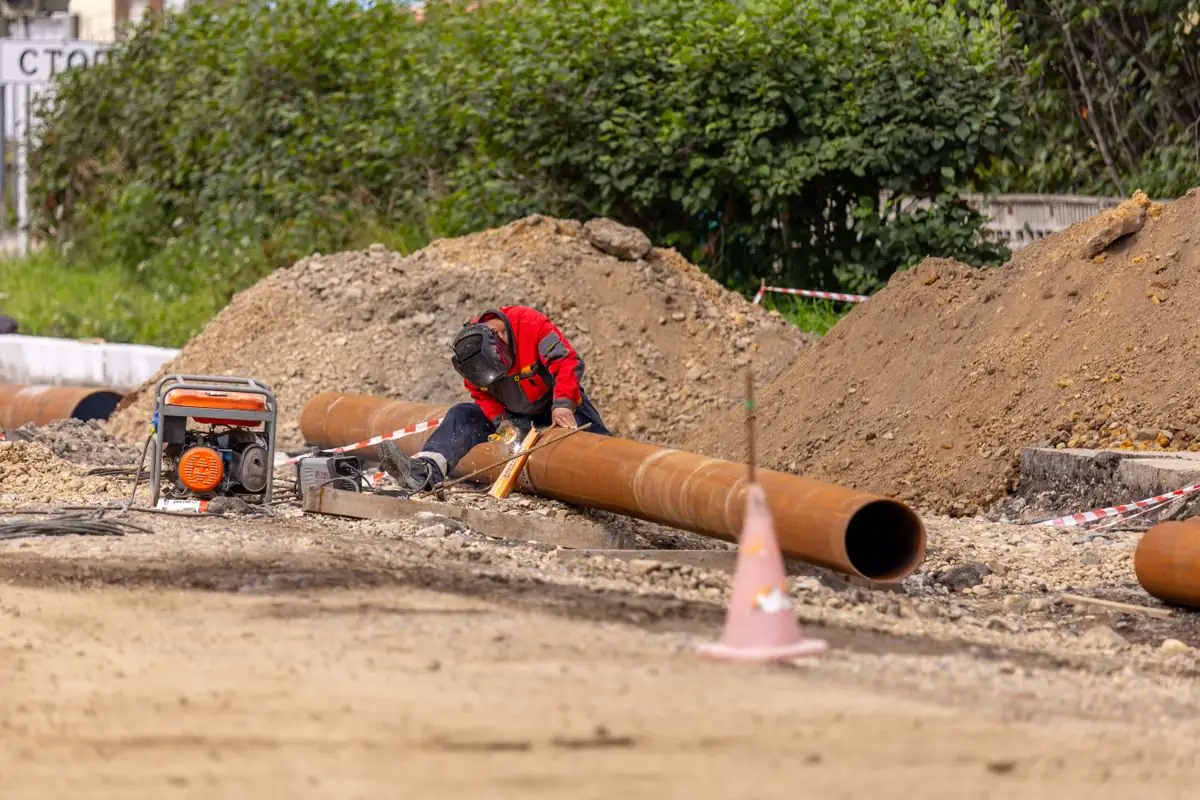
Every repair starts with the recording and a locate, so we know the depth, position and length of the damaged section. Then we talk through the realistic options. A short, shallow break is often best handled with a spot excavation: we dig down to the pipe, cut out the failed piece and join new PVC with approved couplings. Longer runs of failing pipe may suit full replacement of the lateral. Where digging would disturb mature trees, interlock or a finished driveway, trenchless approaches can be worth discussing.
Before any digging, utility locates are requested so gas, hydro and communication lines are marked. Any work that needs a permit or a city inspection is arranged as part of the job, and we explain the timeline before we start. Once the new pipe is in, we camera the repaired section, backfill in layers and restore the surface to a tidy, level state.
Markham houses and what shapes this job
Soil is a large part of the story. Much of Markham sits on clay till, which holds water, swells and shifts with the seasons. That movement can pull older clay pipe joints apart and lets settled PVC develop sags. Homes in Buttonville, German Mills and parts of Thornhill also have large, established trees whose roots follow moisture straight to any opening.
Location of the damage shapes the plan. A break under the front lawn is a straightforward dig. One beneath a stamped concrete driveway or a porch is a bigger conversation, and one under the city road allowance is usually the municipality's to address. The camera locate tells us which side of the property line the problem sits on.
If you are planning a backwater valve or a new basement bathroom, it often makes sense to combine work while the line is open. One excavation is kinder to the yard than two.
Living with the work
During a lateral repair the house cannot send water down the drain for a period of time. We plan that window with you, keep it as short as possible and tell you when it is safe to use fixtures again.
Ring us without delay if
Call promptly if sewage appears in the yard or basement, if the ground over the line begins to sink, or if clearing no longer restores flow. Our sewer camera inspection page explains the first step, and our note on tree roots covers the most common cause.
The camera locate tells us which side of the property line the problem sits on.
From the job notes of Plumbers in Markham
Job card · Sewer & main drain
On the van for this job
- Push camera plus a sonde locator that finds the break from the lawn
- Floor drain plugs and wet-vac for backed-up basements
Signs you need this
- The basement floor drain fills when the washer empties
- A sewer odour rising around the basement floor drain
What we check before we pack up
- Open the main cleanout and see which side holds water
- Camera the lateral to the property line
| Pipe | Where we find it | Typical fault |
|---|---|---|
| Clay tile lateral | Older villages, pre-1960s | Root entry at joints, cracked bells |
| PVC lateral | 1980s onward | Bellies, offset joints after settling |
How the job runs, start to finish
- 1
On the phone
Explain what the water is doing and where. We ask the age of the house and which valve or breaker to shut while we drive over.
- 2
Drop cloths down
Floors and cabinets get covered, the water or gas is isolated and the work area is lit.
- 3
Find the failed part
We open the trap, cleanout, access panel or wall where the fault is, and show you what we found.
- 4
Quote, then work
We explain what failed and what the fix costs; no cutting starts until you say yes.
- 5
Cut, fit, seal
Old parts come out, new pipe, valves or fixtures go in, and joints are soldered, pressed, crimped or glued.
- 6
Test and ticket
We run water, pressure-test or fire the heater, check for drips, clean up and leave a written ticket of what was done.