Residential · Pipes, leaks & valves
Backflow Prevention Testing in Markham
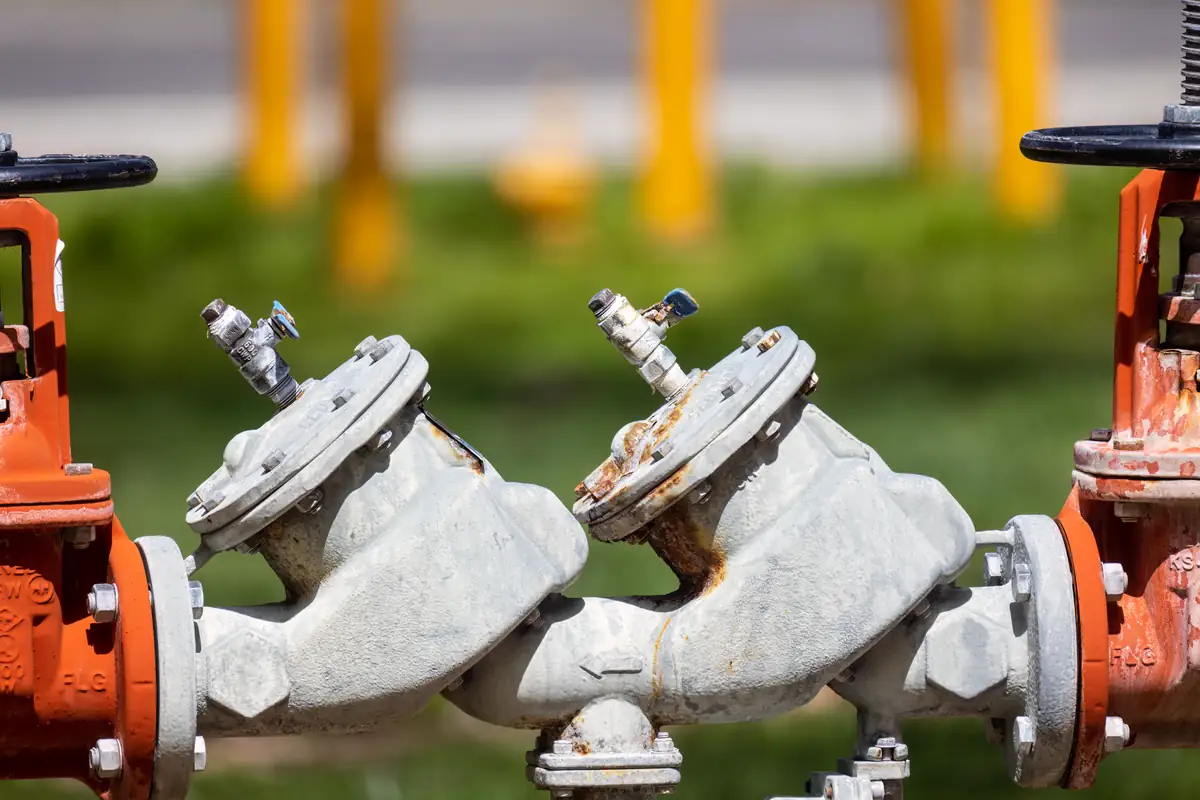
A backflow preventer keeps water from your building flowing backwards into the city supply. Testing confirms it still does what it was installed to do.
- Pipe strapped and insulated on cold exterior walls
- Static and flow pressure read at a hose bib
- Copper, PEX and poly-b repairs and replacement
- Main shut-off exercised and labelled
- Licensed plumbers (details on request)
- Price agreed before work
- Call-only, no forms
- Tested before we leave
Signs you need backflow prevention testing
Backflow happens when pressure drops in the municipal main, during a watermain break or heavy firefighting, and water inside a building gets siphoned back toward the street. If that building has boilers, irrigation, chemical lines or commercial equipment, the water heading backwards could be contaminated. Testable devices stop that, and they need periodic checks to prove they still work.
- A notice from the municipality asking for a device test report.
- A new lawn irrigation system, boiler or commercial kitchen.
- A device that is dripping from its relief valve.
- A property purchase where no test history is on file.
Our routine on the day
Testing is done with a calibrated gauge connected to the device's test cocks. We briefly shut the water off, check every check valve and relief valve against its required pressure difference, and record the results. If the device passes, you get a written test report to submit. If it fails, we explain which part is at fault, usually a worn check or a fouled relief valve, and rebuild or replace it before retesting.
For new installations, the device type depends on the hazard. Lawn sprinklers commonly use a pressure vacuum breaker or double check valve, while higher-hazard connections call for a reduced pressure principle assembly. We install it at the right height and orientation, with room to test later.
Markham houses and what shapes this job
Most single-family houses in Markham do not have a testable backflow device unless they have irrigation or a hydronic heating system. Large properties in Angus Glen often do, thanks to in-ground sprinklers. Small commercial units along Highway 7 and Woodbine have them on their service lines, and those owners typically receive regular test reminders.
Keeping records
Keep a copy of each annual report with the device's make, model and serial number. If you sell the property or change management companies, that history saves time and avoids a missed test deadline. We note the next due date on every report so it is easy to plan.
Ring us without delay if
If a relief valve is discharging continuously, the device has detected a problem or is fouled. Call for a test and repair. Questions about the main valve on a home service are covered on the main shut-off page, and outdoor sprinkler hose bibs are on outdoor faucet repair.
Commercial tenants should check their lease, too. Sometimes the landlord arranges testing, and sometimes the job falls to the business. A quick question to your property manager avoids a missed deadline and a reminder letter from the city.
Small commercial units along Highway 7 and Woodbine have them on their service lines, and those owners typically receive regular test reminders.
From the job notes of Plumbers in Markham
Job card · Pipes, leaks & valves
On the van for this job
- Pipe cutters, propane torch and press tools for copper
- Gauges for static and flow pressure tests
Signs you need this
- The meter dial turns with every tap off
- Flow that falls off when a second tap opens
What we check before we pack up
- Read static pressure at a hose bib
- Pressure-test new pipe before closing walls
| Pipe | Era | Watch for |
|---|---|---|
| Galvanized steel | Pre-1960s | Rust narrows the bore |
| Poly-b (grey) | About 1978 to 1995 | Fitting failures, brittle pipe |
How the job runs, start to finish
- 1
On the phone
Explain what the water is doing and where. We ask the age of the house and which valve or breaker to shut while we drive over.
- 2
Drop cloths down
Floors and cabinets get covered, the water or gas is isolated and the work area is lit.
- 3
Find the failed part
We open the trap, cleanout, access panel or wall where the fault is, and show you what we found.
- 4
Quote, then work
We explain what failed and what the fix costs; no cutting starts until you say yes.
- 5
Cut, fit, seal
Old parts come out, new pipe, valves or fixtures go in, and joints are soldered, pressed, crimped or glued.
- 6
Test and ticket
We run water, pressure-test or fire the heater, check for drips, clean up and leave a written ticket of what was done.